Voices from Gaza: Rationing Expired Insulin and No Test Strips
16 Feb 2026, 3:18 p.m. in Global Stories, Interviews by Ali Hisham and Mohammed Seyam


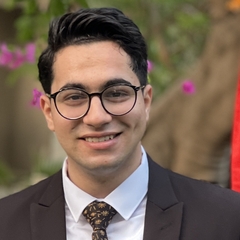
By Ali Hisham, T1International’s Regional Advocacy Consultant for the Middle East and North Africa (MENA) Region, based in Cairo; and Mohammed Seyam, T1International’s former MENA #insulin4all Chapter Leader based in Gaza, now living in Berlin.
People living with diabetes in Gaza have suffered for years under constrained health services due to Israeli blockades.In recent years, this suffering has escalated to unimaginable levels. Insulin, diabetes supplies, and even food became almost entirely unavailable as violence intensified and entire neighbourhoods turned into battlefields.
In the last few weeks, I interviewed three people from Gaza to share their testimonies of living with type 1 diabetes there.
Diabetes does not pause during wars. It requires continuous, uninterrupted treatment to prevent life-threatening and irreversible complications. Yet the patients I interviewed were being forced to survive without reliable, in-date insulin, glucose monitoring, or consistent food or medical care.
All interviewees described weathering famine and severe malnutrition. Each interviewee was forced to eat animal feed and bug-infested flour. Sustained exposure to such horrific conditions in Gaza, combined with the complete breakdown of access to medical care has caused severe physical and psychological harm. In some cases, it has been fatal. In others, it has left survivors with lifelong and irreversible complications resulting from enforced insulin rationing and prolonged hyperglycaemia.
Today, despite the peace agreement signed in October 2025 and the supposed ceasefire, the reality on the ground is even more alarming. International attention has faded, humanitarian access remains fragmented and unreliable, and Gaza’s health system has collapsed with no meaningful signs of recovery. People living with diabetes in Gaza are now facing a deepening crisis: blood glucose test strips have almost completely disappeared, leaving them unable to monitor their levels or prevent diabetes-related complications. Necessary routine medical follow-up is almost nonexistent.
In Gaza, insulin is extremely difficult to obtain, and prohibitively expensive when purchased out-of-pocket. Everyone I interviewed confirmed that nearly all insulin currently circulating in Gaza has expired, raising serious concerns about both its quality and the conditions under which it is being supplied. Lack of insulin access is forcing widespread rationing, skipped doses, and reduced food intake.
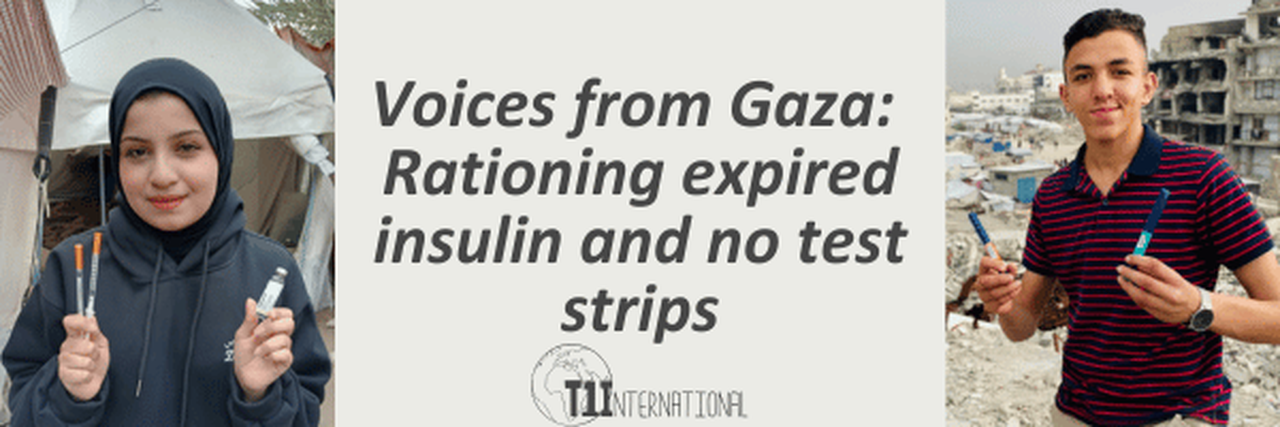
Lojain, 20, has been living with type 1 diabetes for 11 years and now lives in a tent in South Gaza after her home was destroyed from bombings. She spoke about the neglect people with diabetes face in Gaza and said: “We need the world to hear us. Our voice is all we have left. We cannot change this reality, and we cannot bring in help on our own. So please, listen to us.”
Lojain is forced to ration the last insulin pen she has, with no certainty about when she will be able to access insulin again. At the same time, she has been relying on a single pack of test strips for three months, as test strips are no longer available anywhere in Gaza. She now only checks her blood glucose when absolutely necessary. The insulin pen she currently relies on is already expired.
Nariman is 22 years old, living with type 1 diabetes for 10 years and based in North Gaza. She also has no test supplies and is rationing expired insulin. Nariman shared how difficult things are nowadays with no access to diabetes care and no check-ups available at all in Gaza. She also recalled being besieged for 12 days, during which time, insulin ran out and there was no food. She experienced repeated episodes of hypoglycaemia and was unable to function.
Hamza, a 20-year-old living with type 1 diabetes for 11 years and currently based in North Gaza, is also suffering from a severe shortage of blood glucose test strips. After managing with great difficulty to obtain a single pack of strips, he now rations them heavily. Before the war, he checked his blood sugar in the morning, before and after meals, and before bed. Today, he tests only during emergencies, when his symptoms become unbearable.
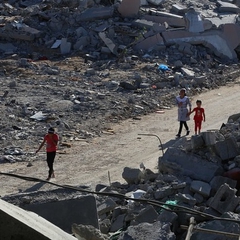
Each month, Hamza has to travel through war rubble for approximately 25 kilometres to reach South Gaza in search of insulin. “There is no insulin at all in North Gaza,” he said. Hamza is no longer able to use the specific insulin type prescribed to him. Instead, he relies on whatever insulin he can find and has to ration doses. Managing diabetes with non-prescribed insulin makes proper dosing extremely difficult and significantly increases the risk of serious complications.
People living with diabetes in Gaza demand urgent action to address immediate, life-threatening realities and counter ongoing and deepening impacts:
- Ensure the continuous, adequate supply of unexpired insulin in quantities sufficient to prevent rationing and skipped doses, with the electricity and cold-chain infrastructure required for safe storage.
- Ensure the continuous, adequate supply of unexpired glucose self-monitoring supplies including testing strips.
- Restore access to routine medical care, including diabetes check-ups and specialist care, to prevent avoidable complications and irreversible harm.
- Provide urgent psychological and trauma-informed care to address severe mental distress caused by ongoing violence and deprivation.
- Support the reestablishment of a functioning health system, including supplies, staffing, and infrastructure rebuilding, to prevent further preventable injury and death.
We stand with people living with diabetes in Gaza and amplify their voices. No one should be forced to manage diabetes without insulin, without glucose monitoring, and without medical care. Diabetes does not pause during wars. It requires continuous, uninterrupted treatment to prevent life-threatening emergencies and irreversible complications. We call on all governments around the world, along with humanitarian agencies, and global health institutions to urgently ensure sustained access to in-date insulin, blood glucose monitoring supplies, refrigeration, adequate nutrition, and specialized diabetes care throughout Palestine. People with diabetes deserve dignity, safety, and the ability to survive their condition. Insulin is a human right. Every delay puts lives at risk, and the world must act now.
Related posts: