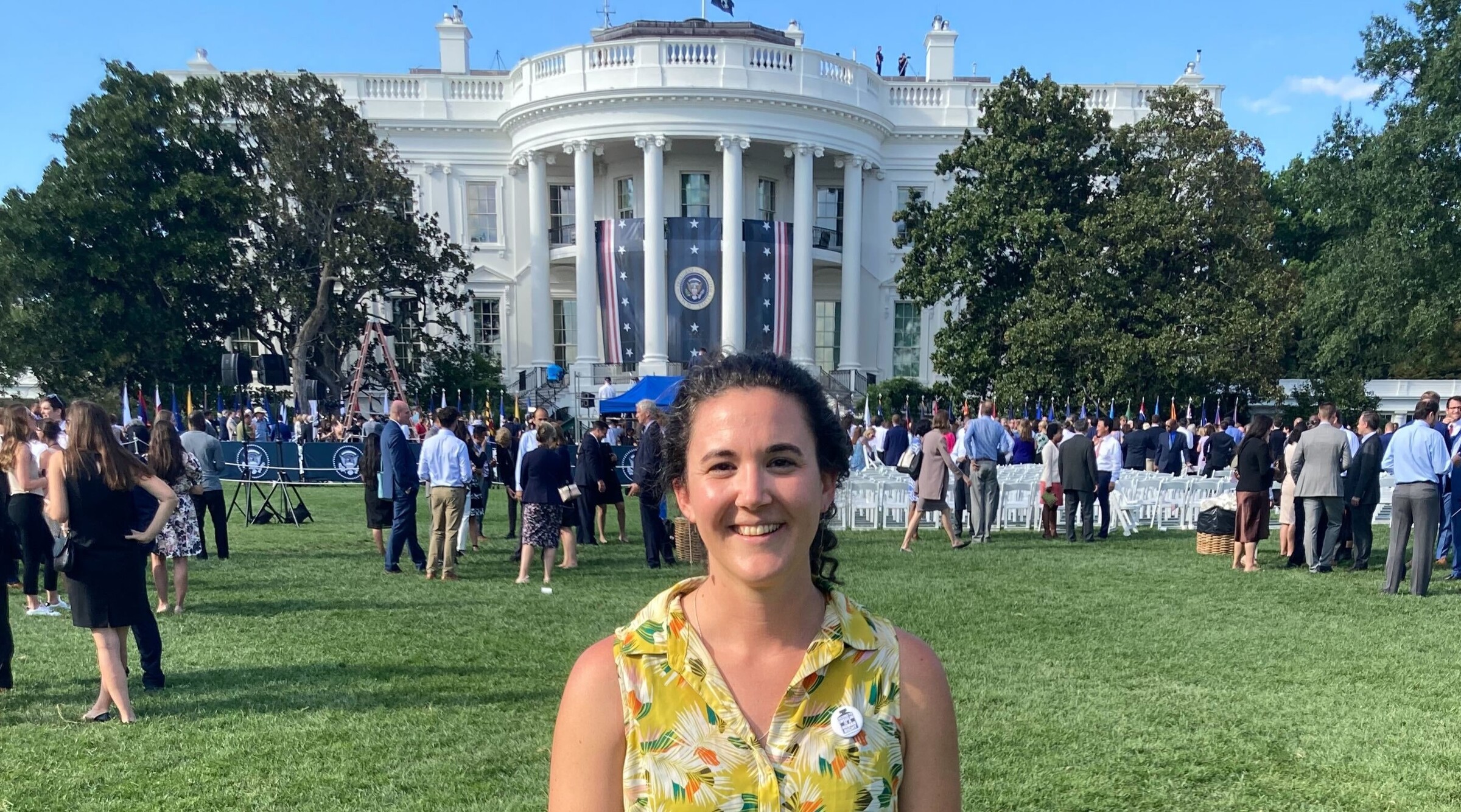
US Policy Manager Shaina Kasper at the celebration of the signing of the Inflation Reduction Act at the White House on September 13, 2022 in Washington, DC.
T1International (T1I) launched our Federal Working Group in March of 2021 to take action on the needs and concerns of people with diabetes at the US Federal level. Together, these volunteer leaders from twelve states learn more about federal-level actions that impact people with diabetes, review and evaluate potential policy solutions for endorsement, and advocate for change by holding meetings, getting media attention, and more. In early 2022, the Federal Working Group agreed on the top US federal priority: a price cap on insulin for all patients in the US, regardless of insurance status.
As T1International Ambassador and Federal Working Group member Nicole Smith-Holt explained, “Ultimately the only way to hold manufacturers accountable for pricing diabetics out of their lives is to create meaningful legislation that caps the price of insulin. This is the only way we can ensure that insulin becomes once again affordable and protects those who are uninsured.”
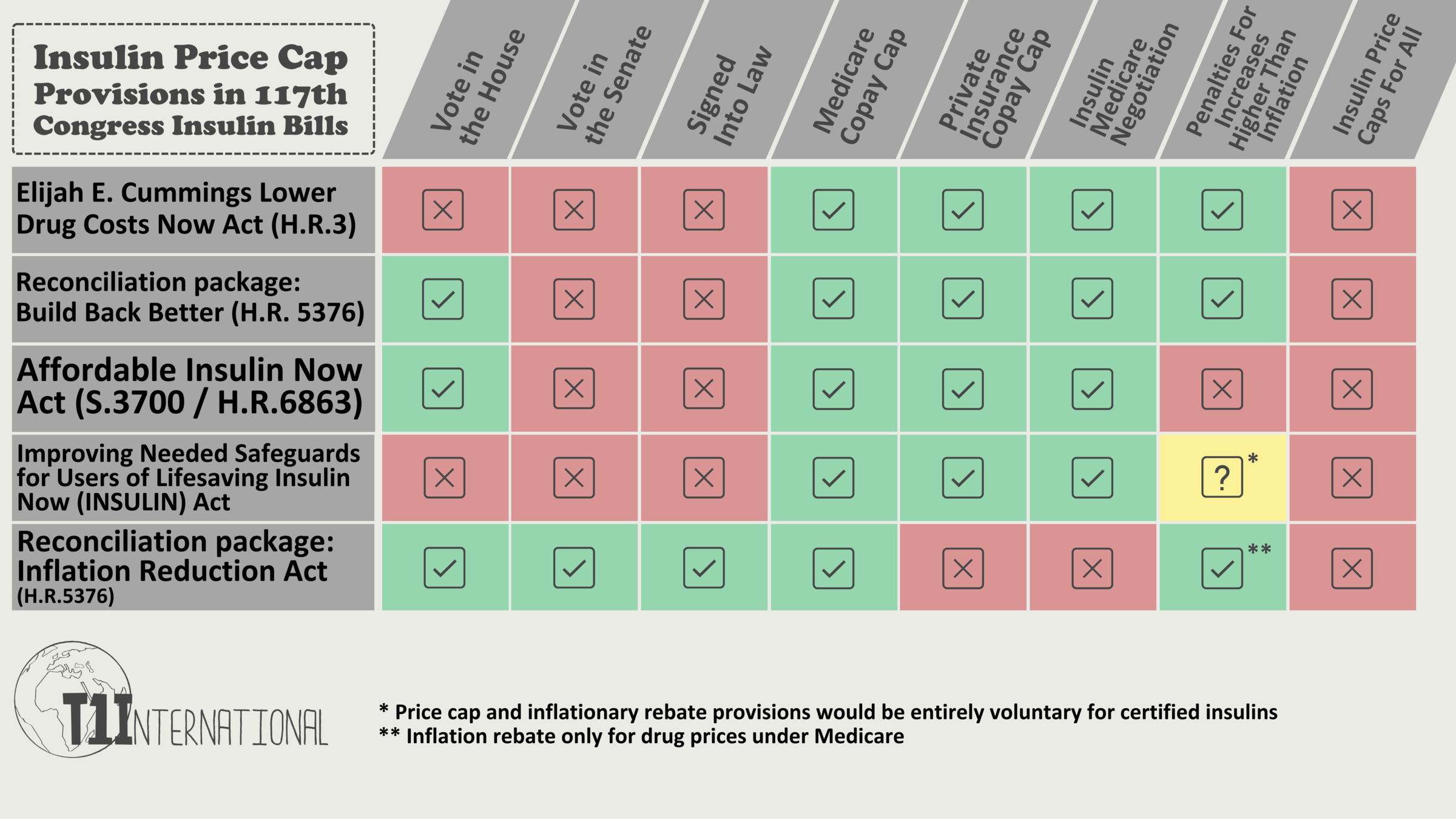
The journey to move towards a federal insulin price cap has been long and difficult, including challenging incremental steps. T1International’s Federal Working Group first endorsed the Elijah E. Cummings Lower Drug Costs Now Act (H.R.3 (opens in a new tab)) in 2019. This bill would have accomplished many things, including allowing Medicare to negotiate prices for insulin and other drugs, and extending lower prices to all Americans with public or private sector insurance, and more. This bill never went up for a vote, despite being passed in the House of Representatives with nearly unanimous approval from Democrats.
The work to take federal action to lower drug prices was then taken up in late June of 2021 by a huge reconciliation package that was called Build Back Better (opens in a new tab). T1International’s Federal Working Group did not endorse the Build Back Better Act as we didn’t think it went far enough for patients, but we did support the essential provisions for patients with diabetes including insulin negotiations in Medicare, a $35 copay cap, and penalties for price increases higher than inflation. Despite support on the drug pricing provisions, and after passing the House, the Build Back Better Act’s movement ended suddenly in December 2021 because of one senator’s retracted support.
The fall of 2021 saw the issue of insulin pricing being extensively discussed in Washington, DC. Patients Gail deVore (opens in a new tab), Sa’ra Skipper (opens in a new tab), and Iesha Meza (opens in a new tab) met and spoke with President Biden, and the T1International and Families United for Affordable Insulin What We Lost campaign was launched. The House Oversight committee released their investigative report (opens in a new tab) on drug companies including the Big Three insulin producers, providing further fodder for the need for drug policy change.
In the spring of 2022, Senator Warnock (GA) and Representatives Kildee (MI-5), McBath (GA-6), and Craig (MN-2) introduced the bicameral Affordable Insulin Now Act (opens in a new tab), which was just the insulin provisions of Build Back Better ($35 copay cap for Medicare and private insurance, medicare negotiations). Here is T1International’s statement about the Affordable Insulin Now Act. It again passed in the House, but stalled in the Senate.
Then, Senator Shaheen (NH) and Collins (ME), with Representatives DeGette (CO-1), and Reed (NY-23) introduced bipartisan and bicameral insulin legislation, called “Improving Needed Safeguards for Users of Lifesaving Insulin Now (INSULIN) Act” and sought public input on the legislation’s specificities. Despite sending in 5,000 public comments, T1International technical comments, (opens in a new tab) and weeks of delays, the proposal only allowed for voluntary price cap measures in addition to the $35 copay cap for Medicare and private insurance. Following a damning financial review (opens in a new tab), the bill did not get formally introduced and did not go up for a vote.
T1International and the FWG’s response over the spring and summer of 2022 included proactive media campaigns about the insulin price crisis and the need to push for stronger legislation, including the release of the Human Rights Watch Report on the US insulin affordability crisis, Op Eds in The Hill (opens in a new tab) and CNN (opens in a new tab), and more.
Instead of specific legislation, we saw Senators Schumer (NY) and Manchin (WV) move drug policy reform into their new Inflation Reduction Act (opens in a new tab) to take the place of Build Back Better as legislative text. The bill did not include anything specifically on insulin. An expansion of the package was negotiated in secret and announced on July 27, although it did include key pharma taxes campaign priorities and penalties for drug price increases higher than inflation.
T1International advocates acted quickly and delivered over 1750 petition signatures to Senator Schumer at the rally (opens in a new tab) in front of his NYC office, calling for him to reinsert insulin into the reconciliation package. We also saw PhRMA spend millions of dollars fighting this. Medicare insulin copay caps was the only insulin-specific provision to be included in the bill. Private insurance copay caps and medicare negotiations were not included. It was passed by the House and the Senate and signed into law by President Joe Biden on August 16, 2022. You can see more about what the Inflation Reduction act means for the #insulin4all movement here (opens in a new tab).
“The Inflation Reduction Act left out too many,” said Kristen Whitney Daniels, co-leader of T1International’s Federal Working Group. “Legislators continue to use our stories for political talking points. We will continue to hold those legislators to their campaign promises until insulin is affordable and available to all.”
At the event celebrating the Inflation Reduction Act, President Biden agreed, speaking (opens in a new tab) about the need for insulin affordability and accessibility for all, including the uninsured. The fight for a true insulin price cap continues. Please join us by sending a letter to your Senator here (opens in a new tab).