Overview
The German health insurance system is based on the social security laws of Bismarck from 1883. Everyone living in Germany is obliged to have health insurance, though it is sufficient to have a foreign health insurance. Not having health insurance is an administrative offense and will result in a fine. The system is basically divided into statutory health insurance and private health insurance companies. Everyone chooses from one of the currently 132 different statutory health insurances. Only those who are self-employed, those that have a higher income than 4,575 Euros per month or civil servants (about 11% of the population) may opt for private insurance. In general the state pays most of the health insurance costs for civil servants. Those with illnesses will not pay more than those without any illnesses; in fact, the health insurance company will not ask about know conditions when adding someone to a statutory health insurance. The current monthly fee for statutory insurance is 14.6% of income, plus an individual fee of approx. 0.9%. Private health insurance companies will calculate the monthly fee on the basis of the individual costs.
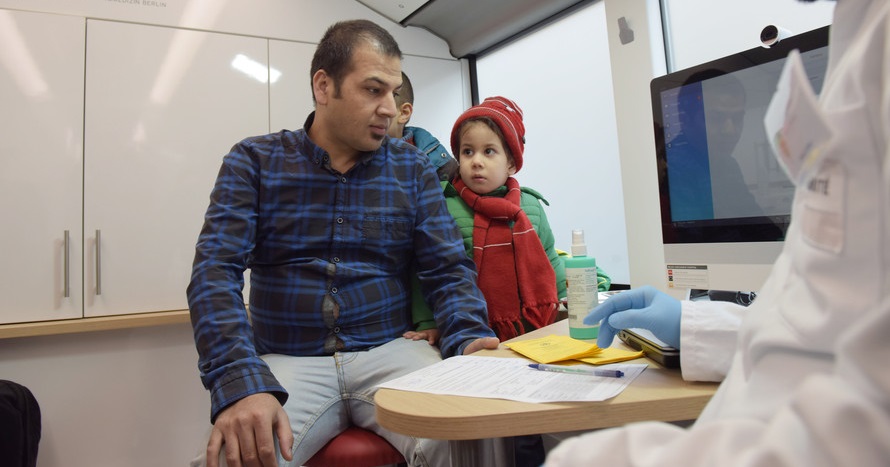
What happens if you need to see a doctor?
You can just make an appointment at the doctor’s office you choose (no matter if it is a general practitioner or a specialist). Those people with private insurance might get an appointment faster. People with a statutory health insurance will not have to pay and will not see a bill. They will just be treated for free, without any differences between general practitioners offices and specialist offices. If you need medication and this medication is only available on prescription (like most of the important medicine) you will get a prescription. You can go to a pharmacy of your choice and get the medication; you have to pay 10% out of pocket, but not less than 5 Euros and not more than 10 Euros. That amount is limited to 2% per year of your income (1% for those with a chronic disease like diabetes). If the medication is available without prescription you have to pay the whole price out of pocket. People with private health insurance will have to pay the whole costs (doctor and pharmacy) out of pocket, though you do not have to pay the doctor’s office immediately, but will receive a bill. The costs are then reimbursed if the health insurance company is obliged to pay the costs.
Who decides what a doctor can prescribe?
The European Medicines Agency is responsible for the scientific evaluation of medicines developed by pharmaceutical companies for use in the European Union. The Federal Institute for Drugs and Medical Devices is also a medical regulatory body in Germany.
Practically, what is it like with type 1 diabetes in Germany?
All materials including blood glucose test strips, ketone strips, pumps, syringes, medication, insulin, therapy and treatment is available for free, besides the small out of pocket payments. Continuous Glucose Monitor (CGM) devices are seldom paid for by the statutory health insurances. Currently, only pregnant woman and people with severe hypos have the chance to get a CGM. Diabetes specialists are available in most regions and you can make an appointment when needed. People tend to go and see the specialist every quarter where they will see your blood glucose values, make an HbA1c and talk to you about the therapy and see if you might have any complications.
What about getting admitted to hospital?
If you have an emergency, you are free to go to the nearest hospital where they will help you immediately. Rescue cars are available under the number 112 and must be at your location within 10 minutes after you call. In bigger cities, rescue cars are often available in less than 5 minutes. If it is not an emergency, a doctor refers the patient to the hospital. Normally you get an appointment within a few weeks, but that depends. Hospital stays cost 10 Euros per day for no more than 28 days per year (if you stay longer it is completely free after the 28th day). This is, along with the aforementioned out of pocket payments for medication, limited to 2% of your income (1% for people with chronic diseases, like diabetes).
How does diabetes care very throughout the country?
The rules, on which the health care system is based are exactly the same throughout Germany, as they are all federal laws. However, the density of doctors and specialists in rural areas is not as big as in cities. Sometimes test strips are limited by doctors for pump users to 600 sticks per quarter, though there is not a statutory rule for that. Finally, if you are not in agreement with the decision of your statutory health insurance, you can sue them in front of the social security courts without any costs (besides the costs for a lawyer).
Thank you to Jan Twachtmann and German Diabetes Aid – People with Diabetes (opens in a new tab) for help with this section.
Last updated 2016