Overview
The Moroccan health care system includes a mix of the public and private sectors. In this respect, it is similar to health systems in many developing countries in which the government assumes responsibility for basic public health activities and for the management and regulation of the health sector. The government of Morocco, largely through the Ministry of Health (MOH), is a major provider of public health care services.
What happens if you want to see a doctor?
As a person with diabetes in Morocco, if you want to see a doctor you have two options. The first option is to go directly to a private medical cabinet to consult an endocrinologist which will cost approximately 250 to 300 dirhams (25 to 30 USD). Option two is to get an appointment in a public hospital, but the waiting lists can be quite long.
Who decides what medicines a doctor can prescribe?
In Morocco, the pharmaceutical sector is tightly controlled by the Ministry of Health. The MoH approves all the drugs that can be prescribed, taking into consideration the availability of the medicines.
The health care professionals such as doctors and pharmacists play a key role to ensure the appropriate prescription and use of drugs. Pharmaceutical company advertising and marketing can sometimes affect the doctors’ decisions on what medicine to prescribe.
Practically, what is it like to live with type 1 diabetes in Morocco?
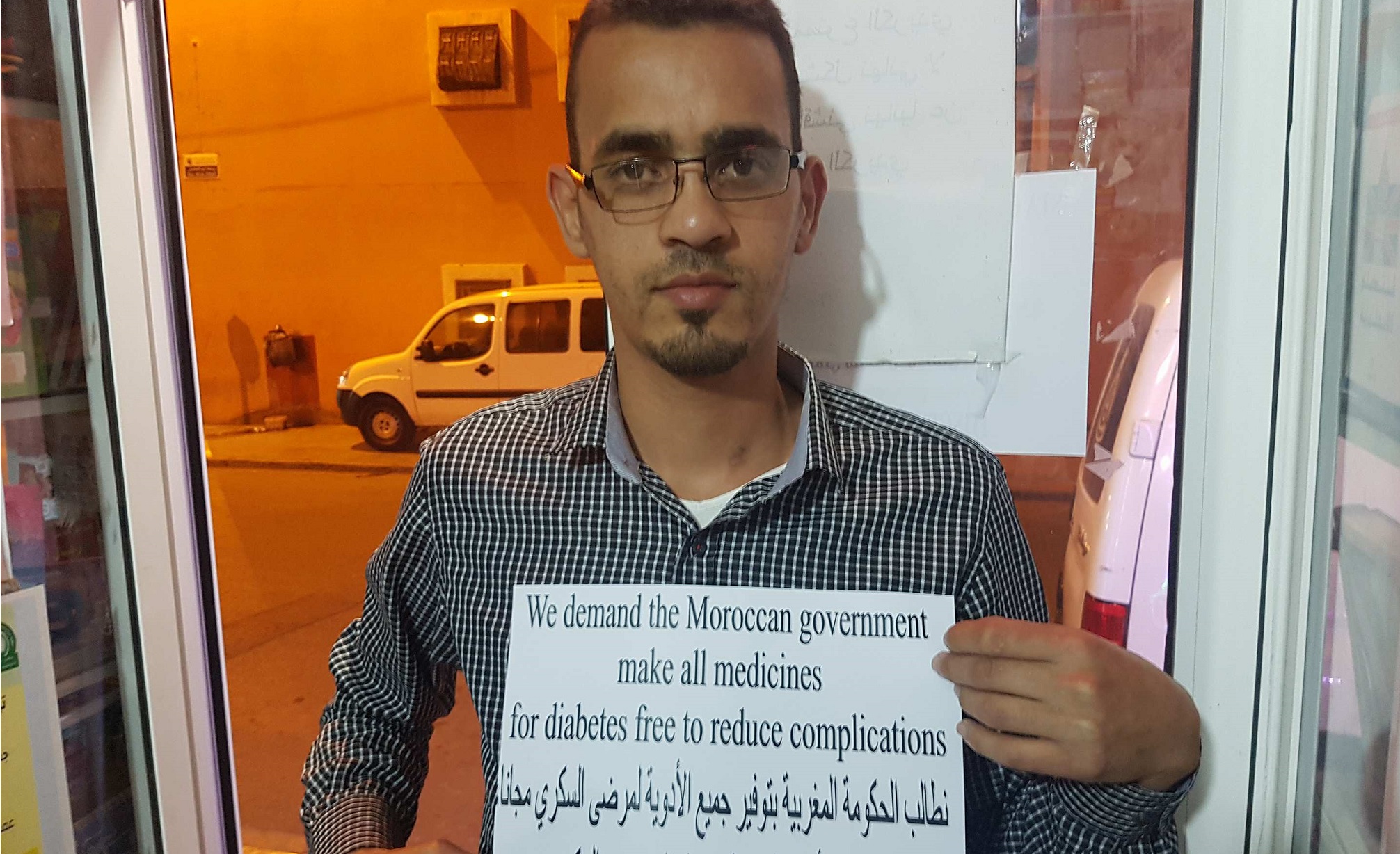
Living with type 1 diabetes in Morocco can be a challenge as not all of Morocco’s population are covered by any form of health insurance, therefore not everyone is able to afford the most basic diabetes supplies including insulin, syringes, and blood glucose test strips. Those who are covered by some form of health insurance can also have hard times getting proper diabetes care because most health insurance plans do not cover test strips and syringes.
Insulin analogues are expensive and aren’t provided by the government. The public hospitals provide Mixtard 30 and Humulin, which are available only to those living in big cities. Diabetes care often does not reach every village or civilian.
Another big challenge that prevent proper diabetes management is the huge amount of paperwork needed to get the reimbursement from health insurance plans. It requires knowledge, perseverance, and lots of self-confidence.
What about getting admitted to hospital?
In every Moroccan public hospital, the emergency room is the entry point to be directed to specialized services. Diabetic ketoacidosis and hypoglycemia cases are taken care of in hospitals within big cities.
How does diabetes care vary throughout Morocco?
Diabetes treatment is much more advanced in big cities, compared to rural areas where certain types of insulin are unavailable and there may not be specialist teams to treat hypoglycemia and diabetic ketoacidosis.
Acknowledgements to Omayma Marouf for contributing the information to this entry. Thank you for your support!
Last updated 2023