
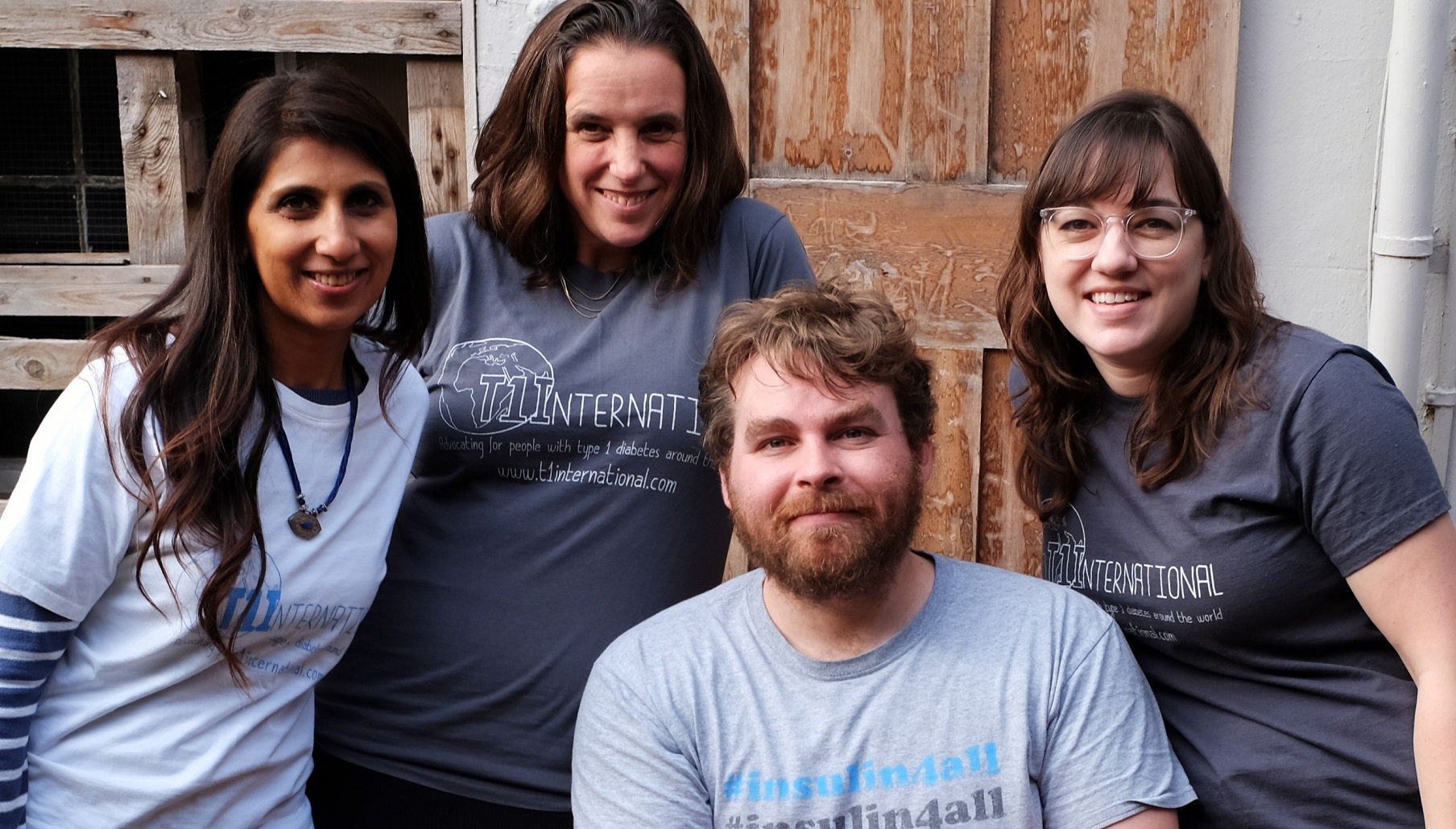
We have had a truly incredible year. Unprecedented growth is the only way to put it. The global insulin crisis continues, but the momentum to counter the crisis is growing, thanks to patients around the world standing up and fighting for their right to health. Below, we share a summary of our highlights and biggest achievements, thanks to your donations, your advocacy, and your dedication to ensuring #insulin4all becomes a reality.
70+ Country Connections
Throughout 2019, our global connections have grown, with our educational map now covering 71 countries around the world. The differences in healthcare coverage remain quite stark, but there’s so much that unifies people living with type 1 diabetes across the globe.
In addition to the growth of our US-based Chapters, we saw the creation of eight Chapters around the world in Austria, Bolivia, Canada, France, India, Kuwait, Philippines, and South Africa. Despite our limited team capacity, we are starting to formalize those Chapters and the resources and support we provide them.
#insulin4all Chapters
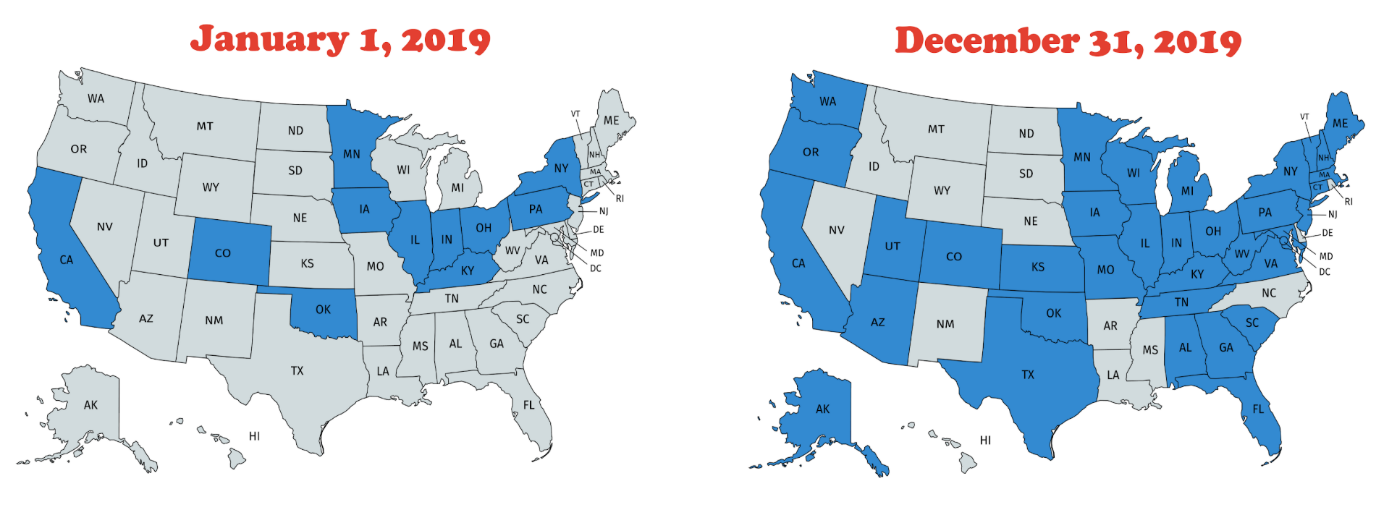
At the start of 2019, we had nine Chapters. Now we have 34 Chapters, with more on the way! In 2020 we foresee having a Chapter in every state! These Chapters achieved incredible things, such as passing state legislation and, importantly, building communities of support to bring people together to fight for change. Here are just a few quick number estimates to give you a taste:
- 12 large advocacy events organized
- 139 state Chapter meetings held
- Hundreds of legislators engaged with
- Thousands of people educated about the insulin price crisis and patient advocacy
Research & Data
In June, we published our report (opens in a new tab) with data from T1International’s 2018 out-of-pocket costs survey, which provides updated statistics about global insulin rationing, as well as other out-of-pocket costs in the USA within a global context. Our 2016 survey was the first of its kind, and we have plans to collect data again in 2020. The 2018 data, with nearly 1,500 responses from 90 countries, has been used by advocates around the globe to support their fight for sustainable improvements in their countries.
T1International also put out a Policy Brief (opens in a new tab), published especially for advocates to use when educating their policy-makers about the insulin price crisis in the USA. This document, in conjunction with our In Memory page collecting and sharing the stories of those who were lost too early due to insulin rationing, provide a powerful picture that makes it impossible to deny the need for action to lower drug prices. Our data and resources have been used and cited by (opens in a new tab) various members of Congress.
This year, T1International began working with a consortium led by ITPC Global (opens in a new tab). We received funding to undertake research exploring ideas around access to treatment for insulin-dependent diabetes among people also living with, and at high risk for HIV. The research will be carried out with Karolinska Institute and we hope that the outcomes will produce advocacy tools for improved access to treatment, care and support of insulin-dependent diabetes in African communities.
Legislation & High-Level Advocacy
As highlighted above, Chapters helped advocate for legislation in many states and countries around the world. Several Chapters ensured the passage of emergency insulin access laws and saw transparency and price cap legislation proposed. Our Bolivia Chapter secured a commitment from the Bolivian government to provide analogue insulin to children with diabetes.
#insulin4all Chapter members met with dozens of federal and state lawmakers, provided information and feedback on federal and state bills, spoke at press conferences and drug price roundtables, and shared their stories across the USA and the world. Several patients and loved ones testified before the United States Congress, pushing insulin pricing into the national spotlight and keeping it there.
New York Chapter members attended the United Nations Universal Health Coverage (UHC) Multi-stakeholder Hearing to ensure patients were represented. While there was little mention of diabetes or insulin access, our advocates spoke out and added valuable insight to the discussion around UHC. New York Chapter Leaders also spoke about the USA insulin price crisis at the MSF General Assembly (opens in a new tab), met with the CEO of Novo Nordisk, and attended United Nations General Assembly side events to ensure non-pharma, patient-led advocate’s voices were heard.
T1International Trustees saw another publication (opens in a new tab) in The Lancet Diabetes & Endocrinology citing data from the global 2018 out-of-pocket costs Survey and reinforcing the vital need for patient perspectives to be incorporated at all levels of policy-making.
T1International also joined a group of other organizations, inputting on The Boston Declaration (opens in a new tab) about diabetes in humanitarian crises, and is now working closely with Health Action International (opens in a new tab) and MSF (opens in a new tab) on several high-level diabetes access and cost initiatives.
Trustee James Elliott attended the International Diabetes Federation conference to present about refugees and diabetes. He also presented the findings from the T1International Cost Survey, which were highlighted in a Medscape article (opens in a new tab).
Media
Thanks to T1International advocates and their tireless advocacy around the world, the ‘insulin price crisis’ became a globally recognized term, with countless pieces of media coverage around the world highlighting patient’s plight for better access and affordability.
In the USA alone, there were over 2,000 different media stories about the insulin price crisis in 2019, many of which referenced, quoted, or interviewed T1Interantional Chapters and advocates.
Here are a few highlights:
- Washington Post Magazine, January 7 – Life, Death and Insulin (opens in a new tab)
- BBC News, March 14 – The human cost of insulin in America (opens in a new tab)
- Vox, April 3 – The absurdly high cost of insulin, explained (opens in a new tab)
- Stat, June 18 – One-quarter of people with diabetes in the U.S. are rationing their insulin (opens in a new tab)
- American Prospect, June 24 – The Insulin Racket (opens in a new tab)
- Reuters, June 29 – American caravan arrives in Canadian ‘birthplace of insulin’ (opens in a new tab)
- Washington Post, July 31 – As price of insulin soars, Americans caravan to Canada for lifesaving medicine (opens in a new tab)
- Medscape, September 24 – Diabetes Activist Arrested at Vigil on Insulin Pricing Crisis (opens in a new tab)
- Getting Curious with Jonathan Van Ness, October 1 – Is There An Insulin Crisis Happening? (opens in a new tab)
- Waging Nonviolence, October 24 – Diabetes patients are leading a new access to medicines movement (opens in a new tab)
- Medscape, December 3 – Extent of Insulin Rationing in the US Is ‘Shameful,’ Say Experts (opens in a new tab)
Advocacy Trainings
This year we held several online advocacy trainings with groups in Morocco and Lebanon. We also provided ongoing support to advocates in Costa Rica, Pakistan, Ecuador, Indonesia, Bolivia, Kuwait and India who had undergone training in the past.
We also held our USA #insulin4all workshop and vigil. This was our first ever two-day #insulin4all workshop for USA Chapters. The purpose of the workshop was to bring Chapter Leaders together to build their skills and advocating power. We had about 45 people from 20 Chapters across the USA come together in Indianapolis for the workshop, which included a third annual event outside of Eli Lilly taking the form of a vigil to honor lives lost due to rationing. The event was much-needed, and it culminated in an act of civil disobedience (opens in a new tab) by our Charity Ambassador Nicole Smith-Holt. Her message was clear: she will do whatever it takes to stop the deaths from rationing.
In November, T1International worked with our amazing partners, The Sonia Nabeta Foundation (opens in a new tab) (SNF), to continue our joint Pamoja Advocacy program (opens in a new tab). We came together in Cape Town, South Africa, to train 13 advocates from 6 African countries (Ghana, Kenya, Nigeria, Uganda, Tanzania, South Africa). This was a follow on from the pilot project which we ran in Accra, Ghana in 2018.
The 2019 Cape Town workshop was year 1 of a 3 year project to train a cohort of advocates and equip them to make a meaningful difference in type 1 diabetes care in sub-Saharan Africa. The workshop involved 3 days of classroom-based training where advocates:
- revisited the advocacy and project management skills learnt in 2018
- looked at what lessons we could learn from another successful patient-led advocacy group – the South African Treatment Action Campaign (TAC)
- evaluated their strengths, weaknesses and leadership styles
- identified an advocacy goal and created a plan, with budget, for the following 12 months (production and adoption of a policy to prevent any child with type 1 diabetes from being denied an education in each respective country)
On the fourth day, SNF and T1I jointly hosted a World Diabetes Day Roundtable event featuring the Pamojan advocates along with high-level speakers, including:
- Ms Sandhya Singh, Director of Non-Communicable Diseases, National Department of Health, South Africa
- Margot McCumisky, National Manager Diabetes South Africa National Head office
- Dr Justice Mudavanhu, Deputy Director of NCDs, Ministry of Health & Child Care, Zimbabwe
- Janine Jugathpal, Deputy Director, Essential Drugs Programme, Affordable Medicines Directorate of National Department of Health, South Africa
The Advocates time in South Africa concluded with a trip to Robben Island to see where Nelson Mandela and other political prisoners had been held as they fought to end apartheid. Overall, the training was a big success.
Events & Campaigns
T1International’s Minnesota #insulin4all Chapter led a Caravan to Canada to purchase insulin at a significantly lower cost on the other side of the border. Advocates gathered in Minneapolis, Minnesota to begin their journey. From there, the Chapter travelled to Lansing, Michigan to join the Michigan #insulin4all Chapter, with advocates from numerous other #insulin4all Chapters joining the caravan along the way. The group also visited and held a press conference at Banting House, known as “the birthplace of insulin.” Banting House is the historic home of Sir Frederick Banting, who, together with Charles Best, James Collip, and John Macleod, discovered insulin in 1922. The men sold the patent for insulin to the University of Toronto in 1923 for $1 each, in the hopes that insulin would be available and affordable to all who needed it.
The trip allowed people with diabetes and their families to save money on insulin, and illustrated the critical price difference between the insulin available in the United States and the identical drug available in Canada. Advocates gained significant media attention (opens in a new tab) and were able to emphasize the need for federal government action to create true, long-term solutions to relieve suffering and end deaths due to rationing insulin. The T1International trip encouraged others, including Senator Bernie Sanders (opens in a new tab), to make their own Caravans to Canada to illustrate the crucial price difference and need for legislative action.
Our California (opens in a new tab), DC, Pennsylvania, Iowa, New York (opens in a new tab), New Jersey and Utah (opens in a new tab) Chapters all held Sister Vigils in the run-up to the T1International Workshop and Vigil in Indianapolis. Along with the vigils, advocates were encouraged to call the Eli Lilly ethics hotline to report a violation.
In November for National Diabetes Awareness Month, the Patients Have Power campaign highlighted the need to work with, respect and involve patients at every stage of strategy, planning, and execution. We highlighted that we are the experts about type 1 diabetes and the issues that people with our condition face, so we should be leaders, not sob stories or token add-ons.
With support from medical professionals and input from people living with type 1 diabetes around the world, we created an educational resource for people with type 1 diabetes and their families. We are grateful to volunteer Carly for completing this work as part of her studies and Trustee Dr. Anbreen Slama for adding a strong medical perspective.
Building a Sustainable Organization and Movement and Looking Forward to 2020
We saw the T1International Team grow in exciting ways this year. We hired our first consultant to work with the Chapters and oversee federal insulin price issues. We then brought on our Advocacy Manager, Allison Bailey, who has been an amazing support to all our Chapters, created countless resources, and helped develop our organizational processes.
We really do achieve so much with so little. Despite being a two person team, we have managed all the highlighted accomplishments outlined, and so much more! T1International’s Trustees are also hugely valuable, putting in many long hours and engaging in all aspects of both governance and operations.
In 2020, T1International will continue our Pamoja Advocacy program as well as our global advocacy training projects. We expect to see our Advocacy Toolkit translated into Russian, and we will carry out our 2020 out-of-pocket cost survey to add to our growing database about insulin and supply costs worldwide. Our HIV and type 1 diabetes study will formally get started, and our high-level advocacy efforts will continue.
The new year will also see us welcome a UK-based Administrative Assistant and a fundraiser, as well as a US-based Operational Consultant. The consultant will support us as we set up and develop our 501(c)(3), the USA non-profit base of T1International, which will work in parallel with our UK entity. We expect to hire additional staff, grow our existing Chapters and bring new ones on board, and carry out more campaigns and events. The continuing tragedies and suffering cannot stop soon enough, we are growing our numbers, our voices, and our capacity so that we can win the fight for access and affordability for people with type 1 diabetes on all fronts.