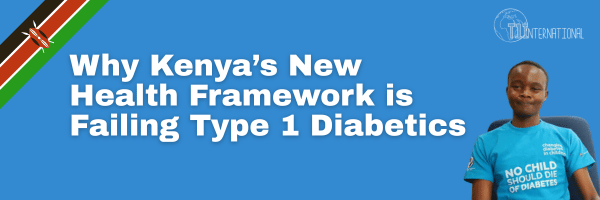
My name is Chasia Lewis and I live with type 1 diabetes in Kenya where I serve as the Chapter Leader for the Kenya #insulin4all Chapter.
I still remember the day I was diagnosed with type 1 diabetes—it felt as though the ground shifted beneath me. Overnight, my world was redefined. Every choice suddenly carried weight: what I ate, how I traveled, even whether I could afford my next vial of insulin. Diabetes became both my shadow and my teacher, an uninvited companion that demanded survival calculations at every turn, while quietly shaping my resilience and purpose.
That reality is what pushed me into advocacy.
The #Insulin4all Chapter in Kenya was born out of conversations with diabetes champions who felt invisible. We came together to build a space where our voices mattered. For many, it was the first time anyone had asked them to share their struggles. That collective honesty became the foundation of our chapter.
The challenges we face in Kenya are stark. Insulin is often too expensive, supplies are unreliable, and mental health support is almost nonexistent. Families are forced to make impossible choices between food, school fees, and life-saving medicine. These realities fuel my determination to mobilize others.
One of the biggest obstacles is the Social Health Insurance Fund (SHIF). When the Kenyan government rolled out the transition from the National Hospital Insurance Fund (NHIF) to the Social Health Authority (SHA), they promised it would help us finally reach Universal Health Coverage. But for those of us living with Type 1 Diabetes (T1D), that promise feels empty. Insulin, glucose monitoring, and education are either missing or insufficient. Instead of a lifeline, SHA has become another wall between us and the care we need to stay alive.
I know the fear of wondering if my supplies will last until the end of the month. That fear is what drives me to organize, to speak out, and to bring others into the movement.
The Pharmacy Cap: Simple Math, Devastating Results
Insulin isn’t optional, and that isn’t up for debate. No insulin, no life. But SHA puts a hard cap on how much you can spend through your outpatient pharmacy benefit: just KSh 5,000 every three months, or about KSh 1,666 per month.
Basic reality check: a single long-acting insulin pen, like Lantus SoloStar, costs somewhere between KSh 1,950 and KSh 2,416. A rapid-acting pen like the Apidra SoloStar is KSh 2,751. If you need both (and many of us do), you’re already short over KSh 1,000 for basic meds. And that’s before you even think about syringes, lancets, or blood glucose test strips.
I’ve had to switch from one insulin regimen to another because of cost and availability. Each change derailed me financially and left scars mentally, physically, and emotionally. I endured repeated hospital admissions, each one a reminder that survival should never depend on affordability.
With benefits slashed far below what things actually cost, people end up in crisis, forced to pay out of pocket, skip doses, or suffer terrifying emergencies like DKA—which should never happen.
No Needle, No Insulin, No Dignity
Giving out insulin but not the tools for injecting it or checking your blood sugar is almost cruel. SHA acts as if syringes and glucose test strips are some kind of optional bonus, not basic parts of treatment. That attitude doesn’t just ignore the medical facts—it runs straight up against the Constitution, specifically Article 54 about the rights of people with disabilities.
The “Once Per Year” Diagnostics Problem
In diabetes care, the HbA1c test is not just another routine—it’s the main way we track long-term blood glucose control. Research proves that dropping your HbA1c by just 1% can cut your risk of serious complications, like blindness or kidney failure, by up to 40%.
Yet SHA covers most critical blood and urine tests only once a year. That’s it. So for almost a whole year, people can be sliding into danger without realizing it. Making things worse, SHA budgets for tests using prices that don’t match public hospital charges. Where SHA allocates KSh 300 for tests like kidney function, government hospitals charge at least double, sometimes much more. It’s not a “benefit.” People end up running out of support long before the year’s out, and those without extra cash are left stranded.
OUR UNIFIED DEMANDS FOR SHA REFORM
We are pushing back against this injustice. We’ve put together a list of concrete demands based on real evidence and the experiences of people living with diabetes. Here’s what needs to happen:
- Make the Pharmacy Cap Match Reality: Raise the current KSh 5,000 quarterly cap to a reasonable KSh 15,000 so it actually covers the basics. Let local health clinics stock insulin to save people a long, expensive trip to bigger hospitals.
- Cover All the Essentials: Change the benefits package so syringes, test strips, and other diabetes supplies are covered too. This could happen through a zero-rated monthly supply kit or at least a 50% government subsidy. Nobody should have to choose between eating and buying a syringe.
- Get Diagnostic Policies in Line with Clinical Standards: Instead of a pointless annual HbA1c limit, cover it every three months—just like the science says. Review and raise the lab fee caps to match what public hospitals really charge. And when someone’s test results put them at high risk (a baseline over 8.5%), trigger automatic coverage for extra screenings.
A Call to Action: Health Isn’t a Privilege
Mobilizing is not just about policy, it is about people. I mentor youth advocates, encourage them to tell their stories, and remind them that their voices are powerful. When we launched our petition to improve SHIF coverage, it was more than a campaign. It was a movement built on lived realities. Each signature carried the weight of someone’s hope for a better future.
We’re not going to watch in silence while bad policies decide who lives and who dies based on what’s in their bank account. Health care should meet the needs of the patient, not run on a calendar or a spreadsheet. So here’s our message: Social Health Authority, Ministry of Health, BPTAP: check your math, listen to the community, and fix your framework before more people are harmed.